
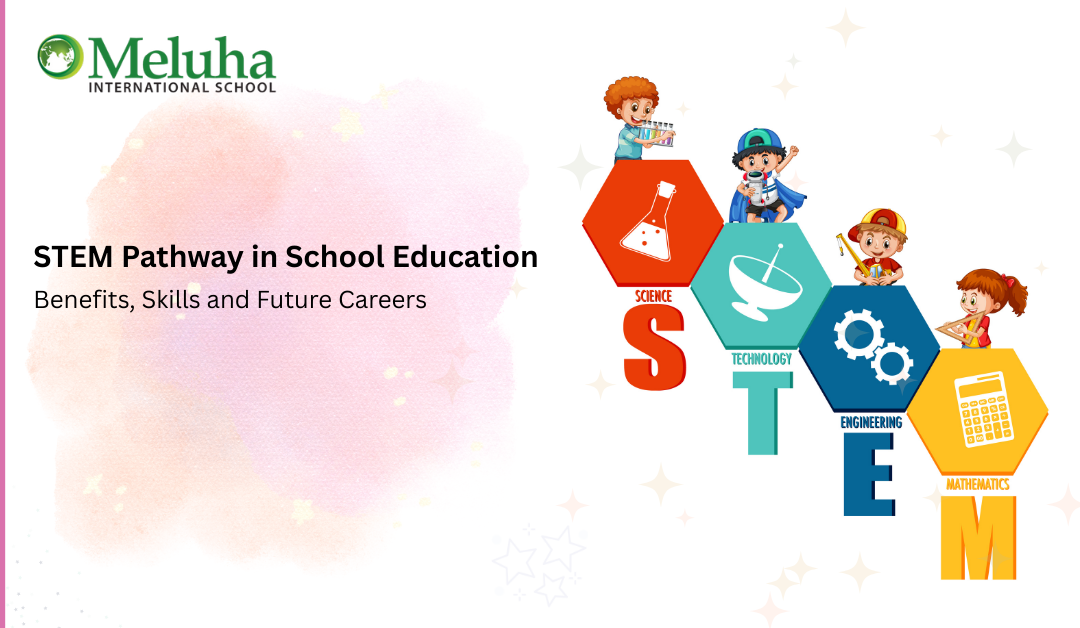
Education is constantly evolving to prepare students for a rapidly changing world. One of the most important developments in modern learning is the STEM pathway in school education. STEM stands for Science, Technology, Engineering, and Mathematics — subjects that encourage innovation, creativity, and problem-solving.
Introducing STEM learning at the school level helps students build practical skills, develop curiosity, and prepare for future careers in technology-driven industries. This article explains the benefits of STEM education, the skills students develop, and the career opportunities it opens for the future.
What Is the STEM Pathway in School Education?
The STEM pathway in school education is an approach that combines science, technology, engineering, and mathematics into a connected learning experience. Instead of studying each subject separately, students learn how these areas work together to solve real-world problems.
For example:
- Science helps students understand how things work
- Technology teaches how tools and digital systems are used
- Engineering focuses on designing and building solutions
- Mathematics develops logical thinking and analysis
This integrated learning approach makes education more practical, engaging, and relevant to everyday life.
Why STEM Education Is Important in Schools
1. Encourages Curiosity and Innovation
STEM education encourages students to ask questions, experiment, and explore new ideas. Instead of memorizing information, students actively discover solutions through hands-on learning.
2. Connects Learning to Real Life
STEM activities help students understand how academic concepts apply to real-world situations. Whether building models, conducting experiments, or coding simple programs, students learn through experience.
3. Prepares Students for Future Challenges
Modern industries rely heavily on technology and innovation. STEM education prepares students to adapt to future careers that require analytical thinking and digital skills.
Key Benefits of STEM Pathway in School Education
1. Development of Critical Thinking Skills
Students learn to analyze problems, evaluate information, and find effective solutions. This improves decision-making and logical reasoning.
2. Improved Problem-Solving Ability
STEM encourages students to approach challenges step by step. They learn to test ideas, learn from mistakes, and improve their solutions.
3. Enhanced Creativity
Engineering and design projects inspire creativity. Students are encouraged to imagine new possibilities and build innovative solutions.
4. Strong Foundation in Core Subjects
STEM learning strengthens understanding of mathematics and science by showing how these subjects are used in real life.
5. Increased Engagement and Motivation
Interactive learning methods such as robotics, experiments, and projects make learning more exciting and meaningful for students.
Skills Students Develop Through STEM Education
Analytical and Logical Thinking
Students learn to examine information carefully and make informed decisions.
Collaboration and Teamwork
Group projects help students communicate effectively and work together toward common goals.
Digital and Technological Skills
Students gain familiarity with computers, coding basics, and digital tools, which are essential in modern education.
Communication Skills
Presenting projects and explaining ideas helps students develop confidence and clarity in communication.
Adaptability and Resilience
STEM activities encourage experimentation. Students learn that mistakes are part of learning and growth.
Role of Schools in Implementing STEM Education
Schools play an important role in introducing STEM learning through:
- Hands-on experiments and lab work
- Robotics and coding activities
- Project-based learning
- Science fairs and innovation challenges
- Technology-integrated classrooms
These approaches make learning active and engaging rather than purely theoretical.
How STEM Education Supports Overall Student Development
STEM is not limited to academics. It also supports:
- Confidence building
- Creativity and curiosity
- Independent thinking
- Leadership and initiative
Students develop both intellectual and personal skills that benefit them in all areas of life.
Future Career Opportunities Through STEM Pathways
STEM education prepares students for a wide range of careers, including:
- Engineering and robotics
- Software development and artificial intelligence
- Data science and cybersecurity
- Medical and health sciences
- Environmental science
- Space research and aviation
Many emerging careers are connected to STEM fields, making early exposure highly valuable.
STEM Education and the Future Workforce
As technology continues to advance, many industries are transforming. Employers increasingly look for individuals with:
- Technical knowledge
- Problem-solving abilities
- Creativity and innovation
- Strong analytical skills
STEM education helps students develop these abilities from a young age, preparing them for future success.
How Parents Can Support STEM Learning at Home
Parents can encourage STEM learning by:
- Supporting curiosity and asking open-ended questions
- Providing educational toys or science kits
- Encouraging participation in science fairs or competitions
- Allowing children to explore technology responsibly
- Promoting reading about science and innovation
Simple activities at home can strengthen interest in STEM subjects.
Challenges in STEM Education and How Schools Can Address Them
Some students may initially find STEM subjects challenging. Schools can support students by:
- Making lessons interactive and practical
- Providing additional guidance and mentoring
- Encouraging a growth mindset
- Creating inclusive learning environments
With the right support, all students can benefit from STEM education.
Conclusion
The STEM pathway in school education plays a crucial role in preparing students for the future. By combining science, technology, engineering, and mathematics, schools create learning experiences that build curiosity, creativity, and practical skills.
STEM education not only strengthens academic knowledge but also develops critical thinking, collaboration, and innovation. With the right guidance from schools and support from parents, students can gain the confidence and skills needed to succeed in higher education, future careers, and an ever-changing world.
